Introduction
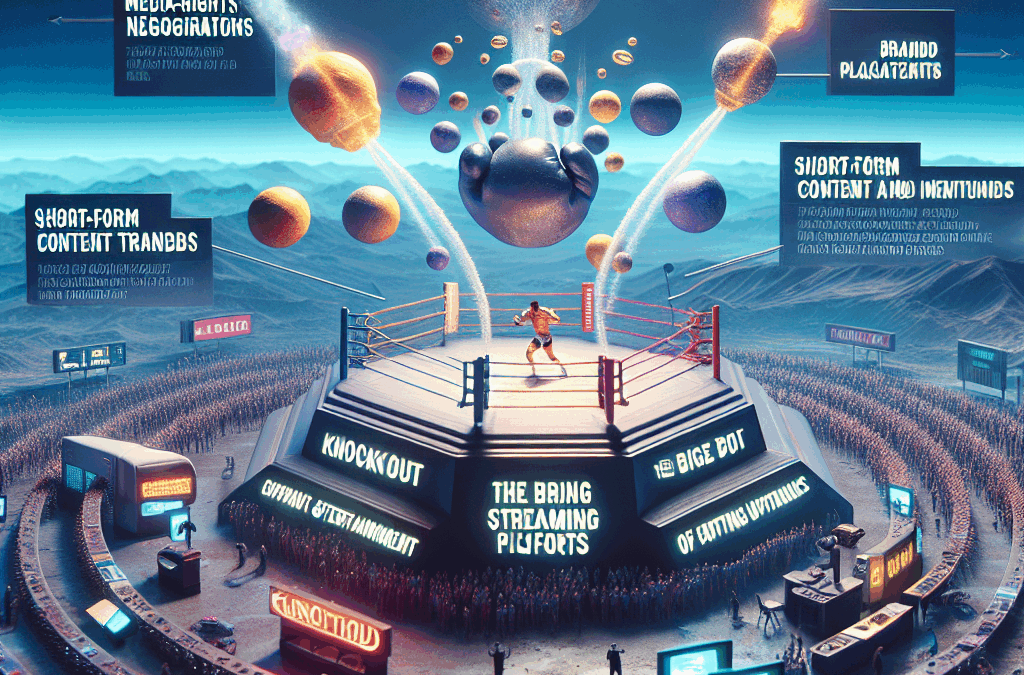
The value of a knockout has always been more than just a highlight reel moment for fighters and fans — it’s a currency. In 2025 that currency is getting a market makeover. TKO Group’s WWE-to-Netflix distribution conversations, the looming renewal of the UFC’s media-rights deal, and potential consolidation between PFL and Bellator are converging to reshape how KO highlight licensing, short-form distribution, and brand ROI will operate. For fans, content producers and aspiring analysts, understanding this “knockout economy” is critical to reading fighter trajectories, monetization opportunities, and where attention — and dollars — will flow.
1) Media-rights realignment: The macro forces shaping KO monetization
Large-scale media deals change incentives. Netflix or other global platforms are chasing clips, moments and bingeable content that keep subscribers engaged. WWE’s expanding relationships with streamers illustrates a major shift: platforms want packageable, replayable assets. The UFC — currently a premium asset on the sports rights market (UFC) — is negotiating from a position where short-form virality and highlight reels have proven value beyond linear viewership.
Meanwhile, the regional competitive landscape is shifting: the PFL and Bellator consolidation talk (if it proceeds) would create a larger library of highlights and talent crossovers to license, increasing the bargaining power of non-UFC promoters when packaging highlights for social platforms and subscription services.
Key takeaways for the media-rights angle:
- Streaming platforms will pay for exclusive, re-purposeable highlight libraries as much as live windows.
- Rights deals may bifurcate: live broadcast vs. clip/licensing windows, with different price points.
- Smaller promotions gain leverage when they aggregate highlight content across merged rosters.
2) KO highlight licensing and short-form distribution: New rules of engagement
Short-form platforms — especially TikTok, Instagram Reels and YouTube Shorts — have rewritten attention economics. A 10-second knockout can reach tens of millions of viewers, converting casual consumers into subscribers or paying fans. But distribution at scale requires clear licensing and fast-turnaround rights. That’s where corporate deals (like WWE-to-Netflix) and federated libraries matter.
Rights managers will need to standardize metadata around each KO to maximize discoverability: fighter name, event, weight class, timestamp, technique (e.g., head kick, body shot), and an assigned “virality score” based on early engagement metrics. This is a place where advanced UFC stats and MMA knockout records become data assets — not just historical footnotes.
Suggested licensing tiers the market will likely adopt:
- Clip sublicensing: rapid, non-exclusive short-form use for social platforms with automatic revenue share.
- Premium montage rights: exclusive use for promos, documentaries and subscription apps.
- Archival packages: full-event or career libraries for long-form streaming partners.
3) What this means for fighter analysis and performance metrics
For analysts and fans trying to parse a fighter’s true potential, this new ecosystem raises both opportunity and risk. As KO clips become monetized commodities, they may disproportionally inflate fighters’ market value relative to underlying performance metrics. That makes robust evaluation models essential.
Areas of focus for credible fighter analysis in the 2025 knockout economy:
- Contextualized UFC stats: Don’t just count knockouts. Layer in timing (round and minute), opponent quality, and damage metrics. UFC performance metrics dashboards often capture output (significant strikes landed per minute) but need better integration with outcome quality (KO severity, follow-through control).
- MMA knockout records vs. normalized attack rates: All-time UFC records are headline-grabbing, but per-minute KO rates and adjusted opponent difficulty tell a truer story for scouting and fighter power rankings.
- Striking trends and predictive models: Track shifts in MMA striking trends — e.g., increased use of oblique kicks, liver-shot emphasis or head-kick setups off wrestling entries — to forecast who will be the next viral knockout artist. Advanced metrics like strike impact zones and recovery time between clean hits will help refine UFC predictions.
- Cross-platform popularity vs. in-cage value: Social virality can create a feedback loop where a fighter’s promotional opportunities outpace competitive merit. Analysts must separate brand-driven opportunity from sustainable skill-based rankings.
Practical analytics tools that will gain traction: machine vision to tag and rate KOs, weighted databases combining all-time UFC records with opponent-adjusted metrics, and real-time “KO probability” models built into fight previews and power rankings.
4) Brand ROI, sponsorships and the new revenue stack
For brands, the math changes when highlight ecosystems are predictable and licensable. A sponsor doesn’t just buy pre- and post-fight exposure — they buy into a catalog of re-usable moments that can be repurposed for months or years. That makes per-KO valuation an attractive negotiation lever.
Revenue paths to watch:
- Direct clip monetization: platforms and promoters share ad revenue on short-form KO clips.
- Performance-based sponsorships: payscale tied to quantifiable engagement metrics (views, shares, conversion on sponsor codes).
- Indexed royalties: fighters earn residuals from licensed highlight packages included in streaming archives or branded compilations.
- Premium content bundles: subscriber-only KO compilations, behind-the-scenes breakdowns and data-driven fight analysis sold as add-ons.
Brands should demand transparency: standardized reporting on views, demographics and conversion, not just vanity metrics. For fighters, building a sustainable brand requires combining in-cage value (UFC performance metrics, striking efficiency) with off-cage storytelling that extends clip life.
Case study snapshot: How a single KO turns into months of ROI
Imagine a contender lands a viral head-kick KO on a UFC card. The lifecycle could look like this:
- Immediate: Broadcaster highlights, social posts, trending on platforms.
- 72 hours: Clips licensed to third-party creators and monetized via ad revenue share.
- 2 weeks: Brand campaigns reuse clip in sponsor ads; fighter sees spike in follower-based monetization.
- 1–6 months: Clip included in curated compilations for streaming partners; residual revenue flows if contractual splits exist.
Each stage requires clear rights and measurement to ensure fair compensation for fighters, promoters and partners.
Conclusion — How fans and analysts can position themselves
The 2025 knockout economy elevates KO highlights from viral moments to licensed assets with measurable ROI. For fans and aspiring analysts looking to maximize understanding and profitability, focus on these actions:
- Use layered metrics: combine UFC stats and all-time UFC records with opponent-adjusted KO rates and strike-impact analytics.
- Follow rights and platform moves: understand how distribution deals affect where clips live and who monetizes them (see how streamers like Netflix are reshaping sports content).
- Build tools and taxonomies: tag KOs by technique, context and virality to support licensing and predictive modeling.
- Demand transparency: as licensing grows, insist on clear payout structures so fighters capture more value from their highlight moments.
Media rights, promotion consolidation and short-form consumption are converging to make knockouts an industrialized asset class. For the committed analyst, mastering both the data side (UFC performance metrics, MMA striking trends) and the commercial side (highlight licensing, brand ROI) will be the competitive edge in 2025 and beyond. Stay tuned, track the deals, and let the numbers tell you which KOs will be currency — not just spectacle.
For more on how promotions and platforms are adapting, visit the official UFC site (UFC), and follow developments from promotional sites like PFL and Bellator. If you’re an analyst or a brand manager, subscribe to platforms that provide granular UFC stats and consider building a demo dataset to test predictive KO models.
Call to action: If you want a starter template for a KO metadata taxonomy or a simple model to convert UFC stats into a “KO virality” score for scouting or sponsorship valuation, email our analytics desk or download our free starter spreadsheet linked from the publication homepage.
Recent Comments