The modern MMA landscape is being reshaped by two converging forces: global market expansion and the deliberate stacking of supercards by alternative promotions. From the flashpoint arenas in Riyadh to the spectacle of Las Vegas, fans are witnessing an uptick in highlight-reel knockouts that travel across time zones and platforms. For fans, bettors and brands alike, understanding why KOs are going viral — and how to quantify a fighter’s true finishing potential — is no longer optional. It’s the difference between hype-driven noise and profitable insight.
1. The new fight map: Riyadh, Vegas and the supercard effect
When the UFC pushes marquee events into markets like the Middle East, and PFL and Bellator craft “supercards” to match that international appetite, the business logic is straightforward: deliver decisive finishes that translate to shareable moments. Cities like Riyadh offer new stadium-scale crowds, deep-pocketed broadcast deals and a hunger for spectacle that rewards fighters and brands who deliver instantaneous, visceral content.
Meanwhile, PFL and Bellator have learned to manufacture drama by combining crossover names, international contenders and stylistically compatible matchups — a recipe that often produces KO outcomes. Those finishes don’t just secure pay-per-view buys; they create evergreen short-form assets that exponentialize social engagement.
For an overview of official scheduling and global expansion, see the UFC events calendar and promotion pages such as ufc.com, while PFL and Bellator continue to push their own stacked cards at pflmma.com and bellator.com.
2. The data: UFC stats and MMA knockout records tell a story
To separate sensationalism from sustainable trends, analysts must start with high-quality UFC stats and MMA knockout records. Sites like UFCStats and promotion archives provide the raw measures: significant strikes landed, KD rates, finish times and fighter durability. Cross-check that with historical KO records to identify whether we’re seeing true structural shifts or short-lived variance.
Key patterns emerging from recent seasons:
- Concentrated finishing: Stacked cards produce higher-frequency matchups where stylistic overlap creates early finishes.
- Short-form virality: The faster a KO (think the famous 5-second finish that shocked the world), the more likely it is to proliferate across social channels, creating payday moments for fighters and sponsors.
- Cross-promotion spillover: Fighters who appear on international cards gain new fanbases, accelerating highlights into global trends and altering the weight of their performance metrics in predictive models.
Consulting all-time UFC records and knockout leaderboards helps contextualize new KOs against historical baselines to determine if a fighter’s finish rate is anomalous or predictive.
3. What analysts and fans must track: performance metrics that matter
To evaluate a fighter’s real finishing upside — and to build more accurate UFC predictions or fighter power ranking systems — focus on opponent-adjusted, contextualized metrics rather than raw totals. The checklist below prioritizes signal over noise.
- Finishing rate (adjusted): KO/TKO percentage weighted by opponent caliber. A 50% KO rate against low-tier opposition isn’t equivalent to 30% against top-10 foes.
- Significant strike differential: Volume and accuracy combined — fighters who land more than they absorb at pace are likelier to create openings for finishes.
- Knockdown frequency per 15 minutes: A better leading indicator than raw KOs, since it captures how often a fighter produces fight-altering moments.
- Finish window: When the KO happens — early finishes indicate explosive power; late finishes point to accumulation and cardio-led breakdowns.
- Damage absorption/defense metrics: Takedown defense, striking defense and clinch control matter. Fighters can score highlight KOs only if they’re also durable enough to engage.
- Striking mix and trends: Head vs. body vs. leg distribution, frequency of head kicks and switch-step entries can predict sudden KO potential.
- Activity & layoff impact: Ring rust and small-sample hot streaks should be adjusted with decay factors in predictive models.
Advanced analysts should use opponent-adjusted Elo systems, logistic regression models for finish probability, and ensemble methods that combine box-score stats with event-level features (venue, card position, short-notice status). For primary data, integrate official metrics from UFCStats with promotion fight archives and independent databases to triangulate all-time UFC records and individual fighter histories.
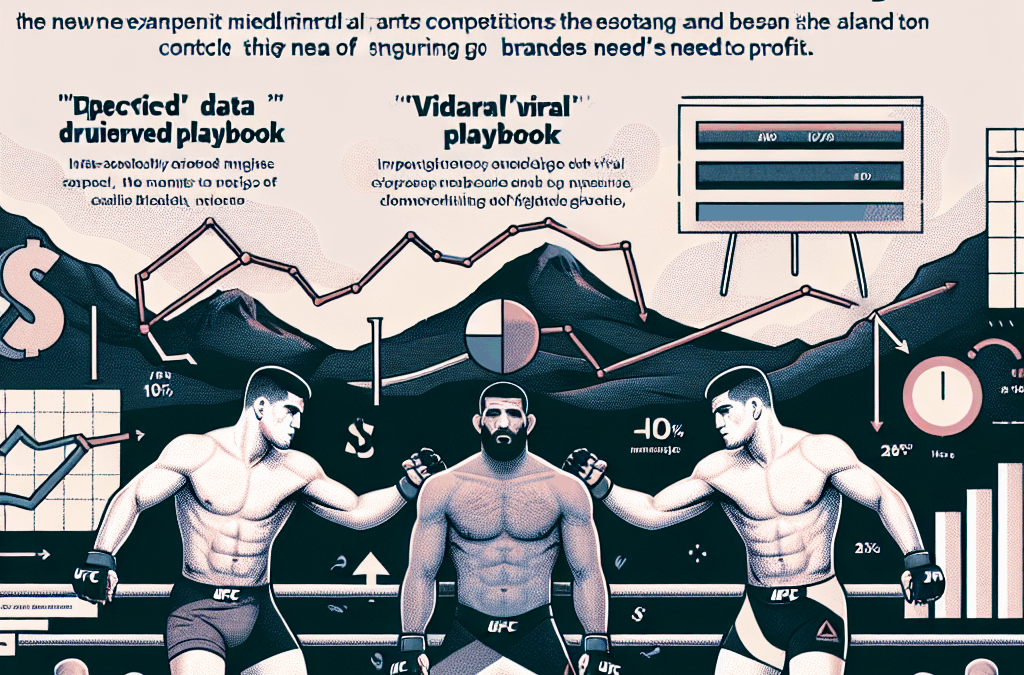
4. The brand playbook: actionable steps for monetizing the KO renaissance
Brands that want to profit from this KO wave must do more than buy ad slots. They must build assets and partnerships that leverage real-time engagement, data intelligence and regional narratives.
- Short-form highlight rights: Secure licensing for 30–60 second KO clips and vertical edits. These are the currency of TikTok and Instagram Reels and drive discovery in new markets.
- Data partnerships: Partner with stats providers to power betting integrations, predictive content and branded fighter power ranking widgets that update in real time.
- Region-specific activation: For Riyadh and other Middle East markets, work local ambassadors and tailor time-zone-aware campaigns that sync with broadcast windows and Ramadan/holiday rhythms.
- Cross-platform betting and fantasy: Use predictive UFC performance metrics to co-develop micro-betting products emphasizing finish props and KO windows — the events that go viral.
- Story-driven sponsorships: Invest in the fighter’s narrative arc (training vignettes, recovery, homecoming moments) to maximize merchandising and long-term attachment beyond single KO moments.
- Measurement and attribution: Tie sponsorships to metrics like highlight engagement rate, new followers per KO, and conversion lifts in local markets to understand ROI.
Brands should also consider co-investing in content studios that can turn raw fight footage and data insights into daily narratives, prediction shows and short-form highlight packages — the formats audiences are bingeing between cards.
Conclusion — The competitive edge is data plus story. The surge of viral KOs from Riyadh to Vegas isn’t a fad: it’s the result of intentional card design, global market expansion and the economics of short-form attention. For fans and aspiring analysts seeking sharper UFC predictions and robust fighter power rankings, the path forward is clear: prioritize opponent-adjusted UFC stats, integrate MMA knockout records into probabilistic models, and contextualize every number with video evidence. For brands, the opportunity is to move beyond passive sponsorship into active storytelling and real-time data products that monetize the moments that stop the world.
If you want a starter dataset or a modeling template to turn these metrics into predictions or sponsorship KPIs, reach out to analytics teams or explore public datasets on UFCStats, then layer in promotional calendars from PFL and Bellator to align activations with the biggest KO opportunities.
Want more tactical breakdowns and model examples? Subscribe to our newsletter for monthly deep dives on UFC performance metrics, MMA striking trends and the evolving intersection of sport and brand strategy.
Recent Comments